Monday, May 5, 2014

Pilot study on rapid composting method of municipal waste

Municipalities in Nepal have always found hard to manage the Municipal waste. They are facing the challenges in sustainable waste management. Municipal wastes is increasing as more people generating their income and the sustainability of landfill and dumping sites are both economically and environmentally questioned. In Municipalities of Nepal, some hundreds of tones of municipal wastes are produced per day, among which 60-70% are organic waste which can be either composted or can be used to produce biogas. Thus in search of alternative treatment methods of these generated wastes composting is been looked as the alternatives by many. But it is equally important to assess the sustainability of the already running composting projects that are treating municipal wastes. It is quite obvious that this huge urban waste problem could be reduced with great gain for all but the problem still persists. About 20% consist of recyclable inorganic materials such as paper, plastic and metal and about 10% is inert materials. Thus composting and recycling can be an efficient ways to reduce the amount of waste that needs to be disposed as well as the cost of waste management. The potential for recycling the waste generated in Nepalese municipalities is high because most of the waste is recyclable and technologies for recycling most of the waste is readily available in the country. Furthermore, there is a market for most recyclable materials because of the demand created by the formal and informal private sector involved in this sector (CBS, 2008; CBS, 2011, SWMRC, 2008).
The primary objective of this project is to assess the feasibility and trial of rapid composting methods in the municipal solid wastes of Bhaktapur Municipality.

Municipal solid waste - by Dhruba Aale (The Himalayan Times)

Tuesday, October 22, 2013

Meta-analysis and Systemic Review of Enteric Fever

Trends of etiology and drug resistance in enteric fever in the last two decades in Nepal: a systematic review and meta-analysis.
Karki S1, Shakya P, Cheng AC, Dumre SP, Leder K.

Abstract
Prospective time-trend analyses on shifting etiology and trends of drug resistance in enteric fever are scarce. Using published and unpublished datasets from Nepal, we performed a systematic review and meta-analysis to understand the trends in etiology and resistance to antimicrobials that have occurred since 1993. Thirty-two studies involving 21 067 Salmonella enterica serotype Typhi (ST) and S. enterica serotype Paratyphi A (SPA) isolates were included. There was an increasing trend in enteric fever caused by SPA during the last 2 decades (P < .01). We observed sharply increasing trends in resistance to nalidixic acid and ciprofloxacin for both ST and SPA. In contrast, multi-drug resistance (MDR), resistance to traditional first-line antibiotics such as chloramphenicol and co-trimoxazole have significantly decreased for both organisms. The resistance to ceftriaxone has remained low, suggesting it is likely to remain useful as a reserve antibiotic for treatment. Trends in decreasing resistance to traditional first-line antibiotics and decreasing MDR provide an opportunity to reconsider these first-line antimicrobials as therapeutic options.

KEYWORDS: antimicrobial, enteric fever, paratyphoid, resistance, typhoid

http://www.ncbi.nlm.nih.gov/pubmed/23985342

Sunday, October 20, 2013

Environment Week 2013

Celebration of Environment Week 2013

MiRON is proud to be a part of this year environment week which was celebrated in first week of June starting from 1st June 2013. We worked very closely as a co-organizer along with GPA(Global Peace Association ) & other partners. Highlights of MiRON participation was on day of 2nd June 2013. Our program co-ordinator Mr. Umesh Kaji Manandhar & Research Volunteer Mr. Shudij Giri delivered an excellent presentation on Biofertilizer & biocomposting.MiRON is very grateful of those who participated actively on the event to make it huge success.
Banner of Nepal Environment Week


Presentation of Biocomposting


Presentation on Biofertilizers

Guest and Chairperson interacting


Interacting with Media

MiRON Team

Water Health Research

Water Health Research

Microbiological research organization Nepal (MiRON) in collaboration with MiRON Laboratory & Research Center (MLRC) Pvt.Ltd. has successfully conducted a field based water health research project. The first phase of data collection was done in Gothatar, Pepsicola, Kathmandu.

MiRON Research Group


Questionnaire Survey


Microbial Degradation of lignocellulytic wastes

Preliminary Research on Bioethanol Production from lignocellulytic wastes by microbial degradation

MiRON & MLRC is conducting a preliminary research on bioethanol/biofuel production from lignocellulytic wastes by microbial degradation. Initial screening of the most potent cellulytic microbes from lignocellulose wastes is going on in MLRC.

Feather waste to biofeed

Feather waste to biofeed


MiRON is currently working on keratinase enzyme project which is intended to screen potent keratinolytic & keratinophilic microbes from feather waste , eventually using this microbial enzyme system for the production of valuable biofeed.

RENTECH Symposium 2012

RENTECH Symposium 2012

MiRON crew presented a prospective research project on bio-ethanol production from lignocellulytic wastes by use of microbial degradation in KU RENTECH 2012 Symposium organized by Renewal Nepal & Kathmandu University School of Engineering

Herbal Research in collaboration with Vedic Science and Technology Foundation Nepal

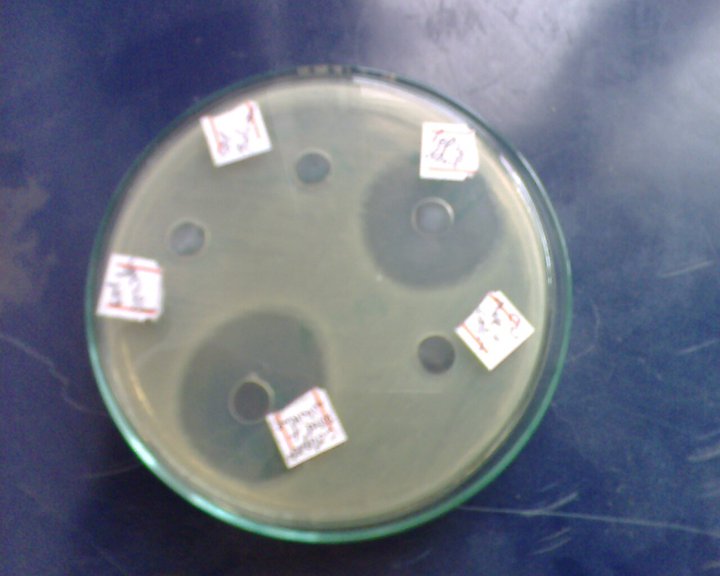
In collaboration with Vedic Science and Technology Foundation Nepal a research was conducted to evaluated the antimicrobial efficacy of water extract of Medicinal Aromatics Plants against pathogenic oral isolates.
Agar well diffusion method

Saturday, October 19, 2013

Blood Donation at Santibatika, Ratna Park, KTM

Blood Donation Program was conducted at Shantibatika Ratna Park organized by MiRON
Blood Donation Program

Safe Water, Sanitation and Hyiene Project Kirtipur

MiRON member taking data
Knowledge Attitude and Practices in Safe water sanitation and hygiene in secondary school children, their parents and respective teachers in Kirtipur was conducted under the support of Kirtipur Municipality and MiRON.
Questionnarie Survey

MiRON member in awareness program in Safe Water Sanitation and Hygiene Program


Monday, May 28, 2012

Talk Program on Microbiology and Oral Health

 A Talk program was held in CEDA hall of Tribhuvan University under the chairperson of Dr. Sushil Koirala and in the presence of chief guest Dr. Pramod Arayal and Alenka Mam. The primary objective of this talk program was to enhance the collaborative work in microbiology with particular focus on oral microbiology and oral health.


Saturday, May 12, 2012

Prevalence of dental caries and the impact of toothpastes and other factors in the oral health of School Children in Kathmandu valley


Present study was carried out among school children of Kathmandu valley to determine the prevalence of dental caries and to know about the influence of other factors including toothpaste on their oral health. Study age group was 5-6 years and 12-13 years. This study also specifies the correlation between dental caries and other associated risk factors among the school children. Furthermore this study evaluates the antimicrobial efficacy of locally used toothpaste against primary and secondary infections causing dental pathogens. The study was conducted from December 2007 to May 2008. Altogether 638 students (325 of age group 12-13 years and 313 of age group 5-6 years) from 30 different schools of Kathmandu valley were included for the study. Stratified cluster sampling with proportional allocation was used while drawing schools samples. Dental status examination was done with the help of trained and well calibrated dentists. DMFT and DMFS were used as standard tools for the determination of prevalence. Semi closed structured questionnaire were applied to know their oral health knowledge, belief, attitudes, perception and to study the influence of underlying factors on oral hygiene only  for 325 students of age group 12-13 years. For isolation and identification of dental pathogens, 39 different samples from 39 patients were collected from Bir Hospital Dental Department and Samaj Dental Clinic and were immediately transported to RLABB, where laboratory work was carried out. They were isolated, identified and subjected to antimicrobial potential test of toothpaste by using standard microbiological methods. Both DMFT, DMFS and caries percentage was found to be higher in age group 5-6 years than 12-13 years. DMFS and caries percentage of age group 5-6 years and 12-13 years was found to be 3.79, 69% and 1.6, 53.23% respectively. But no significance difference at p<0.001 was observed among male and female of both age group. Strong correlation was found in dental caries status and type of schools, diet, and toothpaste using habit. Out of 25 toothpastes used only 7 toothpastes showed observable antimicrobial activity against all 4 test microorganisms viz... Streptococcus mutans, S. sanguis, Lactobacilli species and Candida albicans.
     
 Key words: School children, prevalence, Kathmandu valley, dental caries, dental pathogens, toothpaste, antimicrobial potential.


ACKNOWLEDGEMENT


This project was carried out jointly by students of Central Department of Microbiology, Tribhuvan University (CDM-TU) and Nepal Dental Association (NDA). Thus we are grateful towards all concern faculties and staffs of CDM-TU for their co-operation, guidance and NDA for providing us technical as well as financial support. The laboratory work was carried out in Research Laboratory for Agricultural Biochemistry and Biotechnology (RLABB), Maitidevi, Kathmandu, thus we are also thankful towards RLABB family. We are genuinely obliged to our honorable supervisors Prof. Dr. V.P. Agrawal, Associate Prof. Dr. Anjana Singh, Mr. Kiran Babu Tiwari and Mr. Upendra Thapa Shrestha for their valuable suggestions, enthusiastic and encouraging advices. Also we want to extend our gratitude towards Dental Department of Bir Hospital and Samaj Dental Clinic for providing samples.

Noteworthy to this we are greatly indebted to senior statistician Mr. Anil Thapa for his help during statistical analysis and Mr. Surendra Jnawali for his assistance in software development and data entry. Also we want to show our sincere gratitude towards Dr. Sushil Koirala, President Nepal dental association, Dr. Sudin Shakya, co-ordinator Research and Social Service Committee, Joint Secretary Nepal Dental Association and all members of NDA for their constant stimulation and support. We want to express our thankfulness towards Mr. Kul Raj Rai, President, Microbiological Student Association Nepal (MISAN) and all students of CDM-TU for their support and help. Besides this we are gratified to all dentists, enumerators, school family, students and others who have helped us during field work. Furthermore we are also thankful towards our family and friends for their assist, continuous moral support and motivation.

At last we would like to acknowledge all concerned person, institution and organization that helped us during research work directly or indirectly, without their support the successful completion of this project was never possible. 

Friday, May 11, 2012


Antibacterial activities of locally used toothpastes against dental pathogens

KB Tiwari, UT Shrestha, A Acharya, B Subedi, B Paudyal, M. Jnawali, P. Shakya, U KC, VP Agrawal

Abstract

Background: Toothpastes need to contain various antimicrobial agents in order to reduce, control and prevent different kinds of dental diseases. Different brands have their own composition and concentration of ingredients for their efficacy. The consumers should aware about the facts associated with their health.

Methods: The bacterial pathogens were isolated and identified from various dental samples. Antibacterial activities of 11 different toothpastes available locally in markets were assessed against the isolates by standard agar well diffusion method.

Result: Monomicrobial infections were observed in all cases. The bacterial pathogens were found to be Streptococcus mutans, S. salivarius, S. sanguis, S. sobrinus and S. mitis. Of the assayed toothpastes- Colgate Total, Colgate, Anchor White and Pepsodont were found to be highly effective against the pathogens.

Conclusion: The result showed that the toothpastes containing Triclosan as a major chemical ingredient posses significant antibacterial activities.

Keywords: Streptococcus, Triclosan, Zone-of-inhibition

Journal of Institute of Medicine, August, 2008; 30:2 15-18